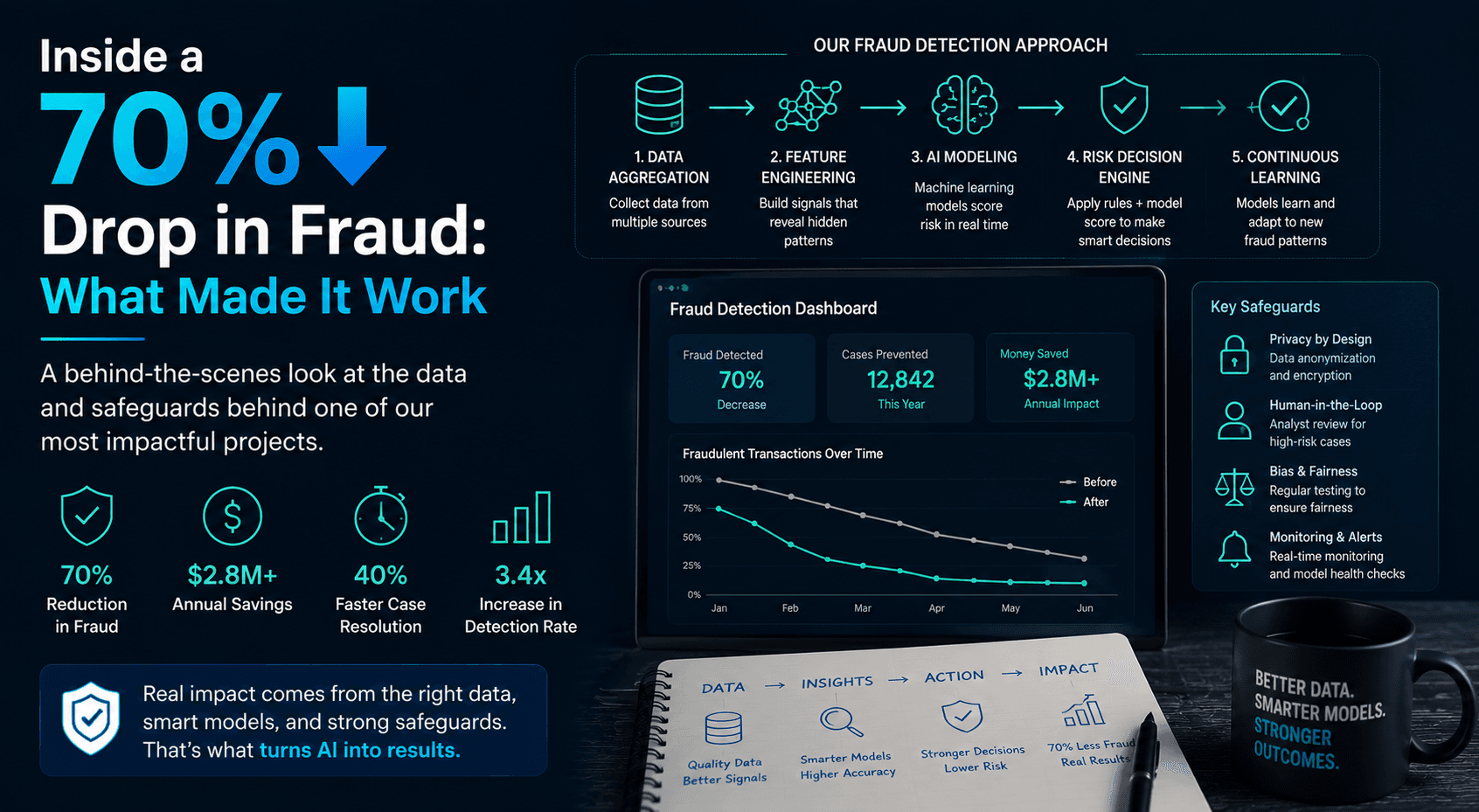
One of our most impactful projects cut a client's fraud losses by roughly 70% in a few months. It's tempting to tell that story as "we added AI." The truth is more useful: the model was the easy part. What made it work was the design around it — the data, the safeguards, and the decision to keep humans in control.
The problem
The client was reviewing suspicious transactions by hand. It was slow, it was inconsistent, and it didn't scale — as volume grew, more fraud slipped through simply because the team couldn't keep up. They didn't need a fancier model. They needed a way to catch more of the bad while bothering fewer of the good.
Why we started with the data, not the algorithm
The single biggest lever wasn't the choice of model — it was getting the history clean and honest. We pulled together past transactions, carefully labelled which had turned out to be fraud, and made sure that label was accurate. A model is only as good as the examples it learns from, and most of the early work was unglamorous data cleanup.
The model was a few weeks of work. Getting the data right was most of the project — and most of the result.
Scoring, not blocking
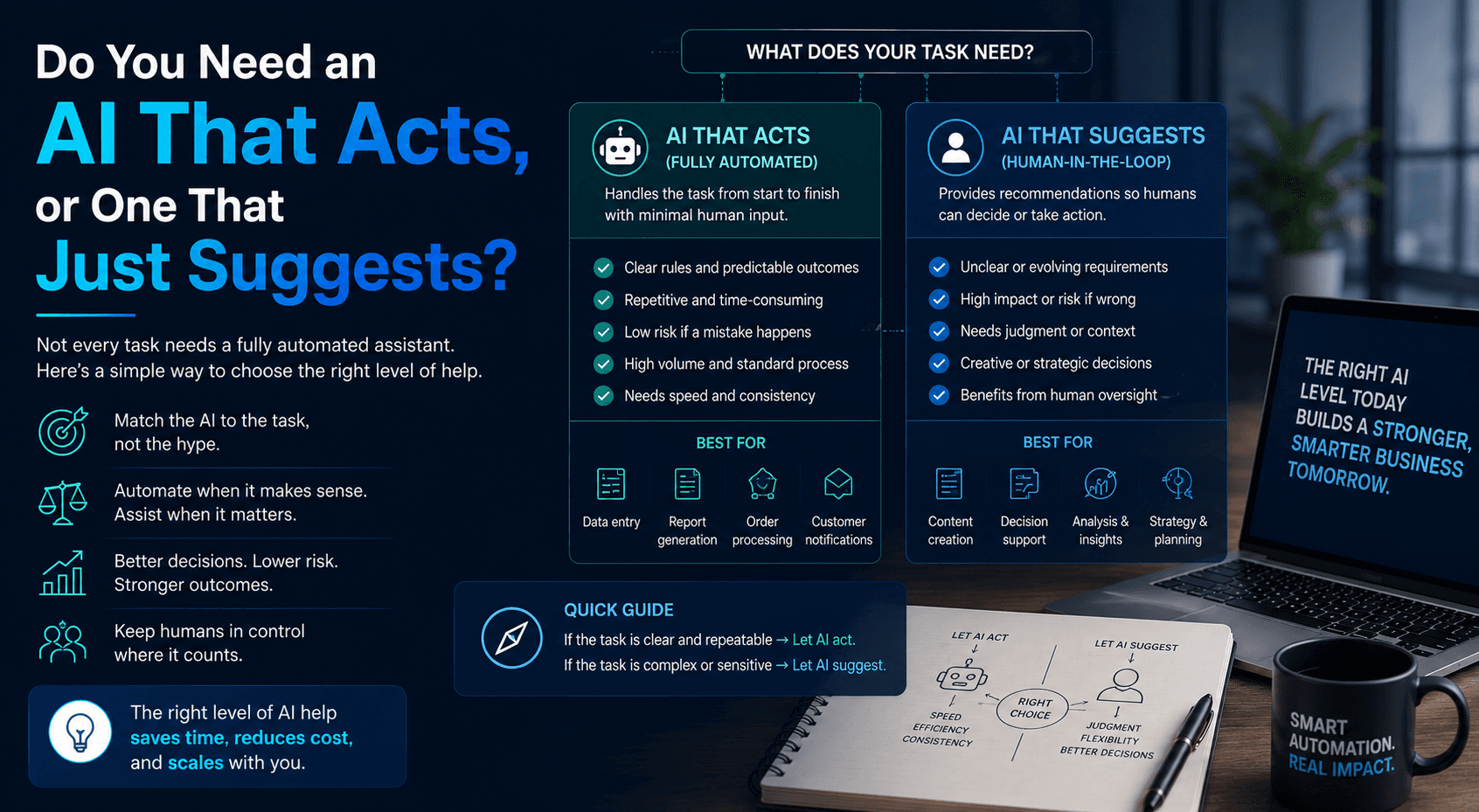
We deliberately didn't build a system that blocks transactions on its own. Instead it gives each one a risk score and a short, plain-language reason. That choice mattered:
- Low-risk transactions pass straight through, so good customers aren't punished.
- High-risk ones go to a human reviewer with the reasons already laid out, so the review is fast.
- The grey zone in the middle gets a lighter check instead of an outright block.
The team's time went where it mattered most, and legitimate customers stopped getting caught in the net.
The safeguards that kept it honest
A fraud model that can't explain itself is dangerous. We built in a few non-negotiables: every score came with its reasons, every decision was logged, and a human made the final call on anything serious. We also watched for the model quietly getting worse as fraud patterns shifted, so it could be retrained before accuracy slipped.
Why it actually stuck
Plenty of fraud models get built and then ignored because nobody trusts them. This one stuck because the reviewers trusted it — they could see why it flagged something, override it when it was wrong, and watch it get better over time. Trust, not accuracy alone, is what turned a good model into a 70% result.
The lesson travels well beyond fraud. The win came from clean data, a system that assists rather than overrules, and safeguards that let people trust it. Get those right and the AI does the rest.
Written by StayClever Team